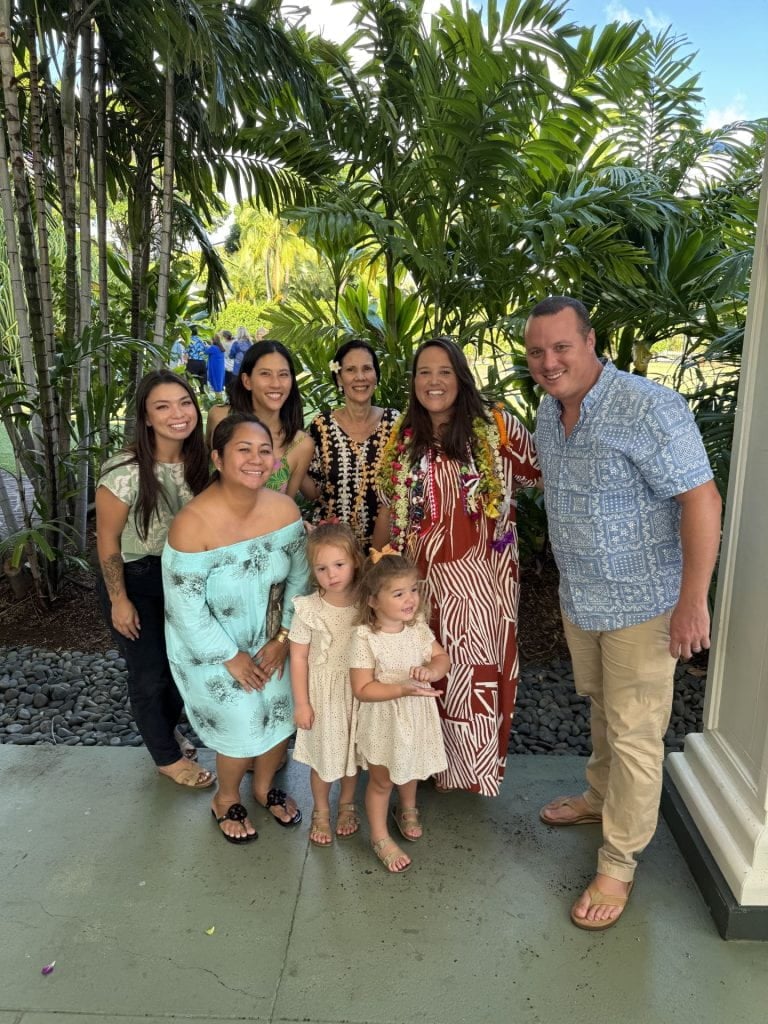
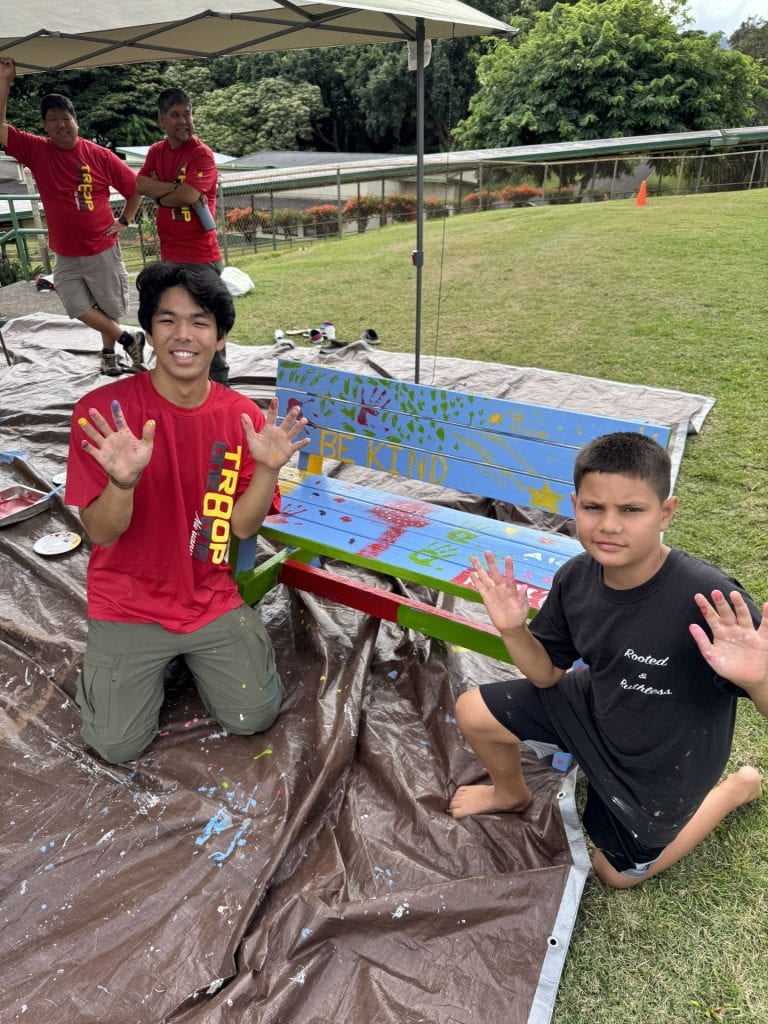
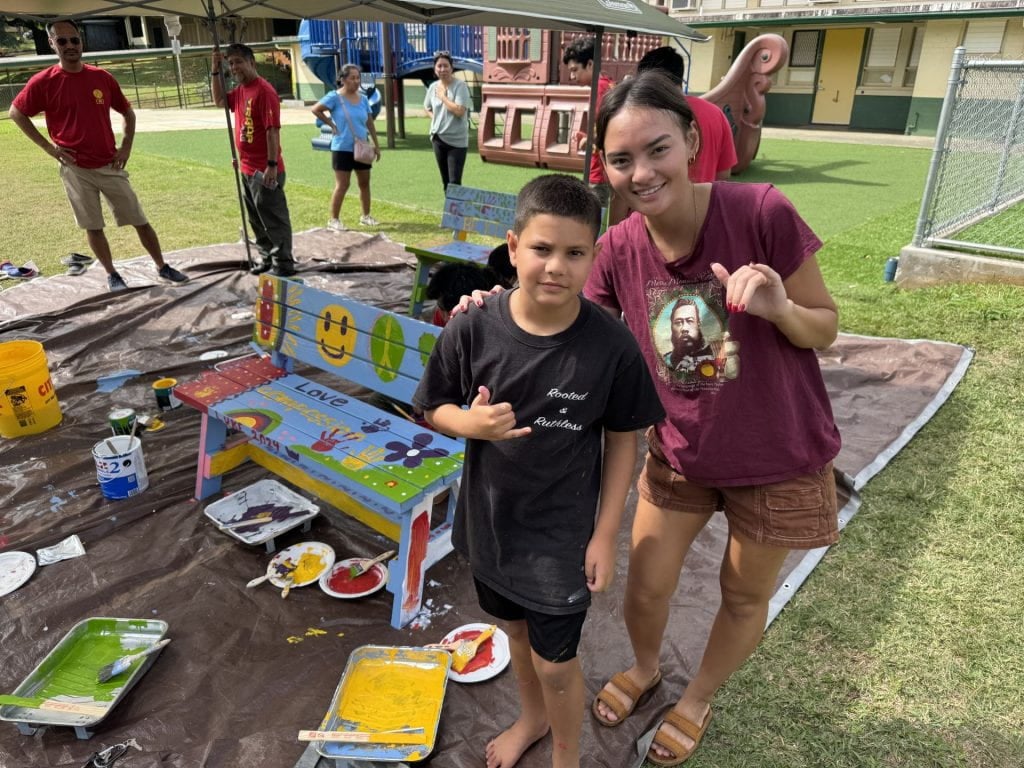
Lōkahi, often translated as unity and expressed with a feeling of harmony, helps us understand that all of us are part of a life force that is unbroken, even when some of us feel separated from the group. With lōkahi, we support and accept each other in acknowledgement of this unbrokenness and work together in love.
Aloha At Home
ALOHA FOCUS FOR THE WEEK: LŌKAHI
This is how you know I’m old. I grew up in a time before Spam musubi. In fact, some of my friends who were not of Japanese ancestry didn’t even know what was a musubi. When I brought one for lunch they asked, “What’s that?” I thought they were crazy. I assumed we all ate the same food and were exposed to the same cultural traditions. At the same time, they stared at me in disbelief when I had not heard of meat jun, bibingka or squid luau. We marveled over the smells of each other’s foods. No one wanted to try my natto and I had a difficult time with bagaong, but we all agreed on the deliciousness of the foods we dared to taste.
Food opened our eyes to new worlds, expanding our palates. Yet, it was not what bonded us. What made us friends ran a lot deeper. We all liked trying new things, especially if one us considered the experience a must. We weren’t afraid to be temporarily repulsed and gave everything a second or third chance before totally dismissing it.
This shared value was something hidden to us at first. Before we were friends, we started off as a bunch of boys playing chase every recess. We zigged-n-zagged across the field without even knowing each other’s names. Eventually a few of us tired of running after each other and suggested inventing our own games. Some guys wanted to continue playing chase and peeled away to form their own group. Those of us who wanted to play something more novel, moved over to the monkey bars. Over time, recess extended to hanging out after school. We walked to each other’s houses and played until the sun slipped below the Waianae range. We stayed for dinner, trying delicacies considered ordinary by our hosts.
As a kid, I never considered what connected us. I just knew we had fun together and enjoyed each other’s company. Looking back, I realize the lōkahi – the undiscovered connections – we shared, made us compatible as friends. It helped us become closer while prompting us to grow as individuals. Eventually, we went to different schools, moved apart, and lost touch. Yet, despite this distance, our friendship; our aloha remains with me to this day.
5 PURSUITS of LŌKAHI:
Inspired by Gholdy Muhammad
Please watch this: The Proudest Blue: A Story of Hijab and Family by Ibtihaj Muhammad with S.K. Ali, art by Hatem Aly. Then with you child, answer the following:
- IDENTITY: Discuss with a kupuna, how does your family/culture celebrate when you are getting older and becoming an adult?
- SKILLS: What is your favorite way Faizah describes her sister’s hijab? Explain how Faizah’s description paints a vivid picture of her sister’s hijab.
- INTELLECT: Research what is a hijab and it’s significance to people who wear them.
- CRITICALITY: Faizah’s mother told her and Asiya not to carry around the hurtful words of others. What does it look like to drop the words? What does it mean that they are not yours to keep and belong only to those who said them?
- JOY: Faizah and Asiya share a deep connection in that they have a strong pride in cultural traditions and in celebrating each other. Share with a family member why you are proud of them.
LIVE ALOHA KĀKOU
In 1993, community leaders and kupuna gathered to answer a simple question: how do we create a culture of positive and responsible action?
They agreed upon a set of twelve actions that each would take, and encourage others to carry out. In committing to this, they believed all of Hawaiʻi could begin to create the kind of community we value.
This week, Kāneʻohe Elementary once again renews its commitment to Live Aloha. You will receive the list of twelve actions as well as a Live Aloha sticker. From this list of twelve actions, there are no minimum commitments. Take what you need, give what you can. All we ask is that each of us strive to Live Aloha.
KES OHANA PUMPKIN CARVING

Mahalo to our KES Ohana for sponsoring a spookily fun pumpkin carving night this past weekend. We appreciate all of the ʻohana that attended the event, dressed up and got into the spirit of the event. Mahalo nui loa to all the volunteers that made this event possible including the Acopan ʻohana, the Kamiya ʻohana, Dee Fujinaka, Kumu Kalei Tim Sing and Cherisse Yamada.
CONTINUED PRACTICES:
NOʻAHUNA OF ALOHA
See Uncle Pono Shim explain the Noʻahuna, the esoteric meaning, of Aloha as taught to him by Aunty Pilahi, the Keeper of Secrets.
WEAR KĀNEʻOHE SHIRT WEDNESDAYS
Help us build unity and show our lōkahi by wearing a shirt that celebrates Kāneʻohe on Wednesdays. Wear any previous Fun Run or grade level shirt.
DAILY VIRTUAL PIKO
At the Daily Piko, we share thoughts on the Aloha value for the week which helps us become centered and ready to learn. We begin at 8 AM everyday except Wednesdays.
UPCOMING EVENTS
| Oct 28 – Nov 8 | ʻOhana Conferences – school ends at 12:45 PM |
| Nov 22 | Waiver Day – no students |